
How to Choose Between Semrush One and Semrush Enterprise
How to Choose Between Semrush One and Semrush Enterprise: The Ultimate Guide to Scaling Your Brand Visibility
The New Era of Discovery: Why Your Choice Matters
We have officially entered a new era of digital discovery, and if you are still playing by the 2018 rulebook, you are already falling behind. For nearly two decades, the blueprint for digital visibility was relatively linear: you optimized for Google’s blue links, you managed your technical health to ensure a clean crawl, and you built a backlink profile that commanded authority. Search was a destination, a specific box on a screen. But as we move deeper into the mid-2020s, that landscape has fractured into a million different pieces. Discovery is no longer confined to a single search engine; it has shifted into the "AI search era."
Today, your potential customers are just as likely to find your brand through a ChatGPT prompt, a Perplexity answer, or a Google AI Overview as they are through a traditional organic search result. This shift has created a massive challenge for marketing leaders and enterprise strategists alike. How do you track a brand mention inside a Large Language Model (LLM)? How do you measure the ROI of "AI visibility" when there is no traditional "click-through rate" in a generative response? And perhaps most importantly, how do you manage this complexity across a global organization without creating chaotic, expensive data silos?
The fundamental difference between your two primary options, Semrush One and Semrush for Enterprise, lies in a shift from practitioner-level agility to executive-level governance. Choosing the wrong tier isn't just a matter of price; it’s a strategic fork in the road. Pick a plan that’s too small, and your team will hit data ceilings that stifle growth and leave you blind to competitor moves in the AI space. Pick a plan that’s too complex for a lean team, and you’ll face unnecessary overhead and underutilized tools.
In this guide, we will look under the hood of both platforms. We will analyze how they handle the three core themes of the modern search environment:
Scale: How many keywords, prompts, and pages do you actually need to monitor to maintain market dominance?
Automation: Can your team afford to manualize audits, or do you need AI-driven, agentic workflows to handle the heavy lifting of a multi-brand footprint?
Total Search Coverage: Are you looking at just Google, or do you need a 360-degree view of LLMs, social conversations, and consumer clickstream data to understand the full journey?
Strategist’s Perspective: In my years of consulting for the Fortune 500, the biggest mistake I see isn't choosing the "wrong" tool; it's choosing the wrong scale. Modern discovery is high-velocity. If your data isn't refreshing at the speed of the market, you aren't leading; you're reacting.
Semrush One: The Practitioner’s Powerhouse
For many teams, the goal is high-speed execution. You need to win the search result that is right in front of you. This is the domain of Semrush One. We define Semrush One as the unified solution for teams that need to track traditional SEO and AI-driven discovery within a single, streamlined workflow. It is built on a "One Plan" philosophy, designed to serve teams big and small who want to stop the "tool-switching tax", that hidden cost of productivity lost when jumping between twenty different niche subscriptions.
The target audience for Semrush One typically includes solo marketers, specialized consultants, and practitioners within high-growth SMBs. These are the "doers", the individuals who need to get into the data at 8:00 AM, identify a technical error or a keyword gap, and have a fix in production before lunch.
The primary value proposition here is Fast Time-to-Insight. Unlike legacy platforms that simply dump raw numbers into a CSV for you to decipher, Semrush One is designed to provide actionable recommendations. It tells you not just that your rankings dropped, but why they might have shifted and what specific steps you should take to reclaim your position.
To achieve this, Semrush One organizes its capabilities into four essential toolkits:
The AI Visibility Toolkit
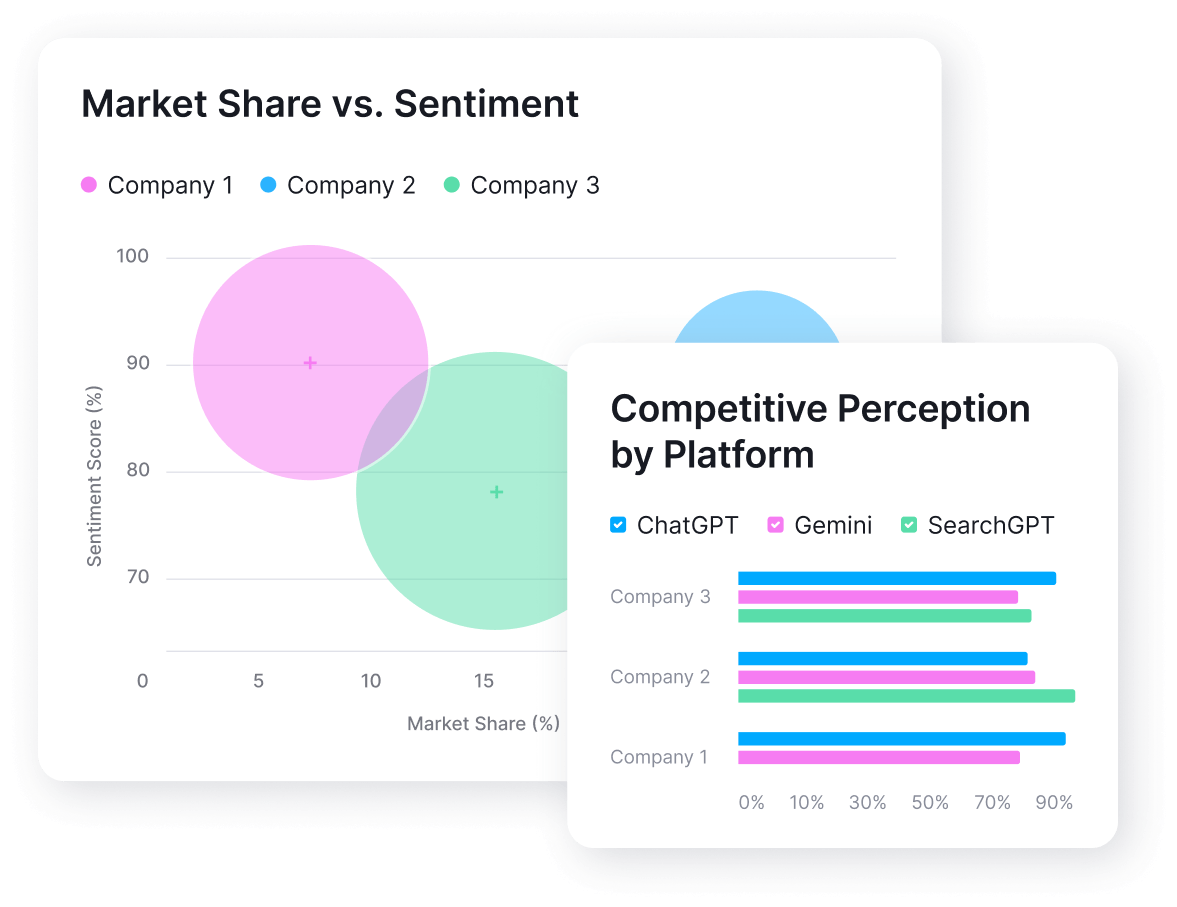
This is the newest addition to the suite, specifically built for the AI search era. It allows marketers to see how LLMs like ChatGPT and Gemini are talking about their brand. You can spot visibility gaps and understand the sentiment of AI-generated answers in real-time. From a strategic standpoint, this matters because it allows you to see the "framing" of your brand, are LLMs recommending you as a "budget option" or a "premium leader"?
The SEO Toolkit
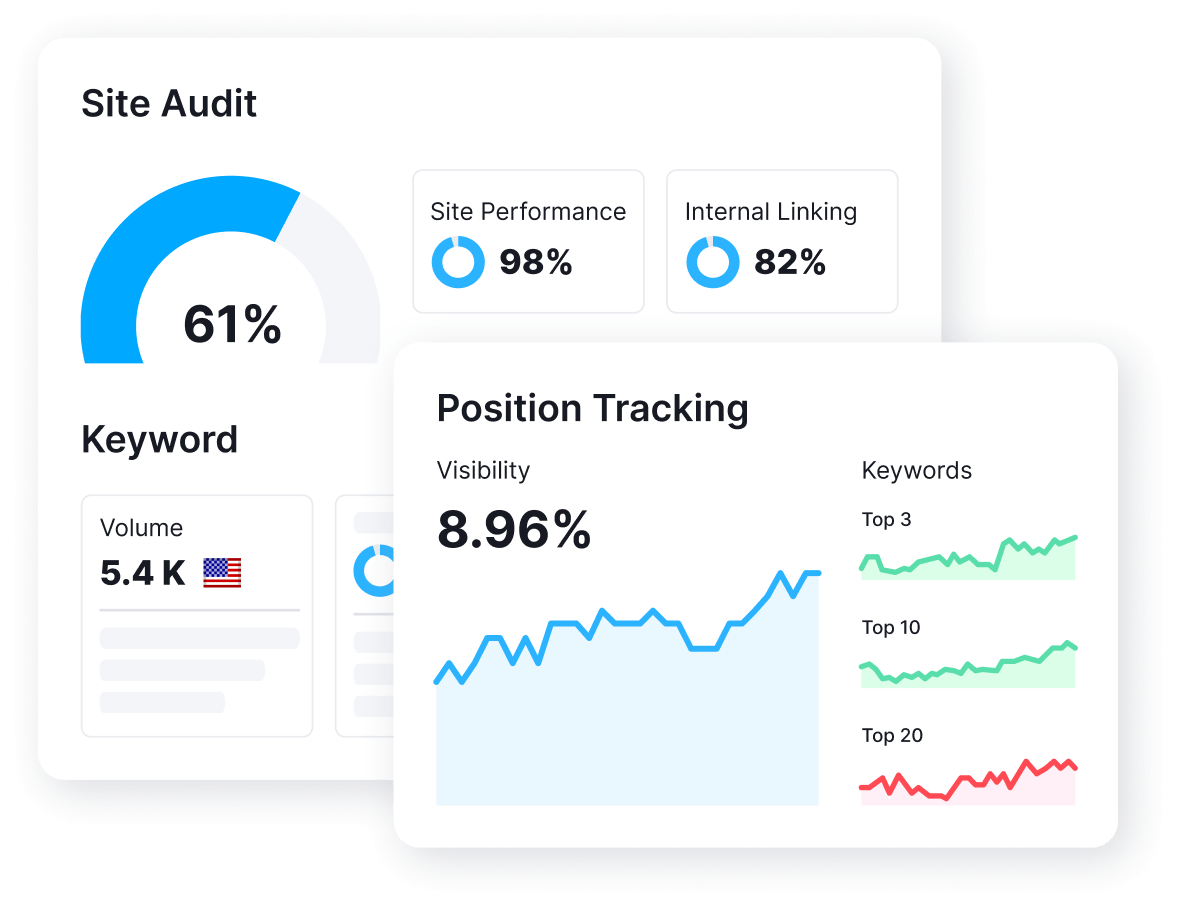
The gold standard for search professionals. This includes everything from the industry’s most accurate keyword research tools (backed by a database of 27.9 billion keywords) to backlink auditing and technical SEO tracking. It’s the engine that powers your rise up the traditional Google SERPs.
The Traffic & Market Toolkit
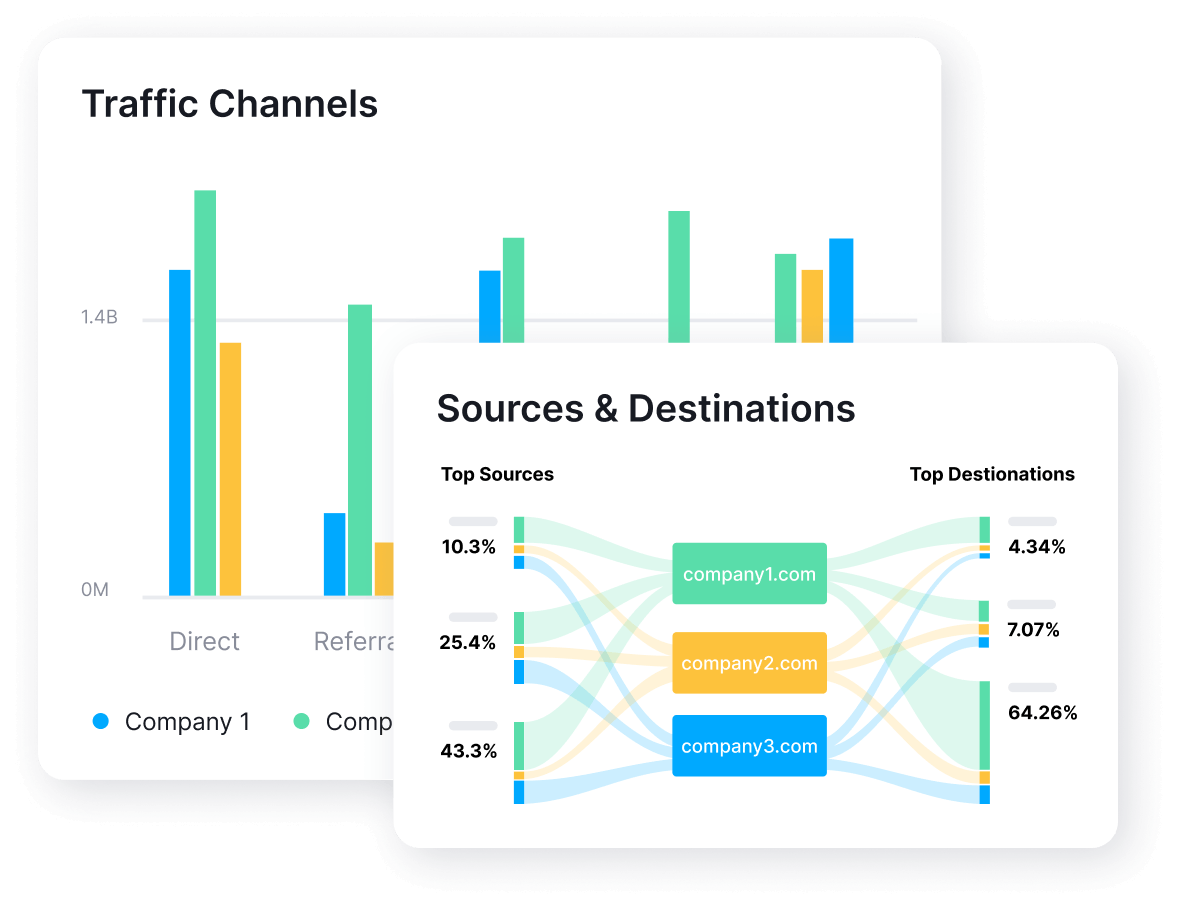
This toolkit focuses on the broader landscape. It allows you to peer over the fence at your competitors’ traffic sources, identifying where their "low-hanging fruit" growth is coming from and how you can replicate their successes. In a real-world workflow, this looks like identifying that a competitor is suddenly getting 30% of their traffic from a specific niche referral site and pivoting your PR strategy to match.
The Content Toolkit
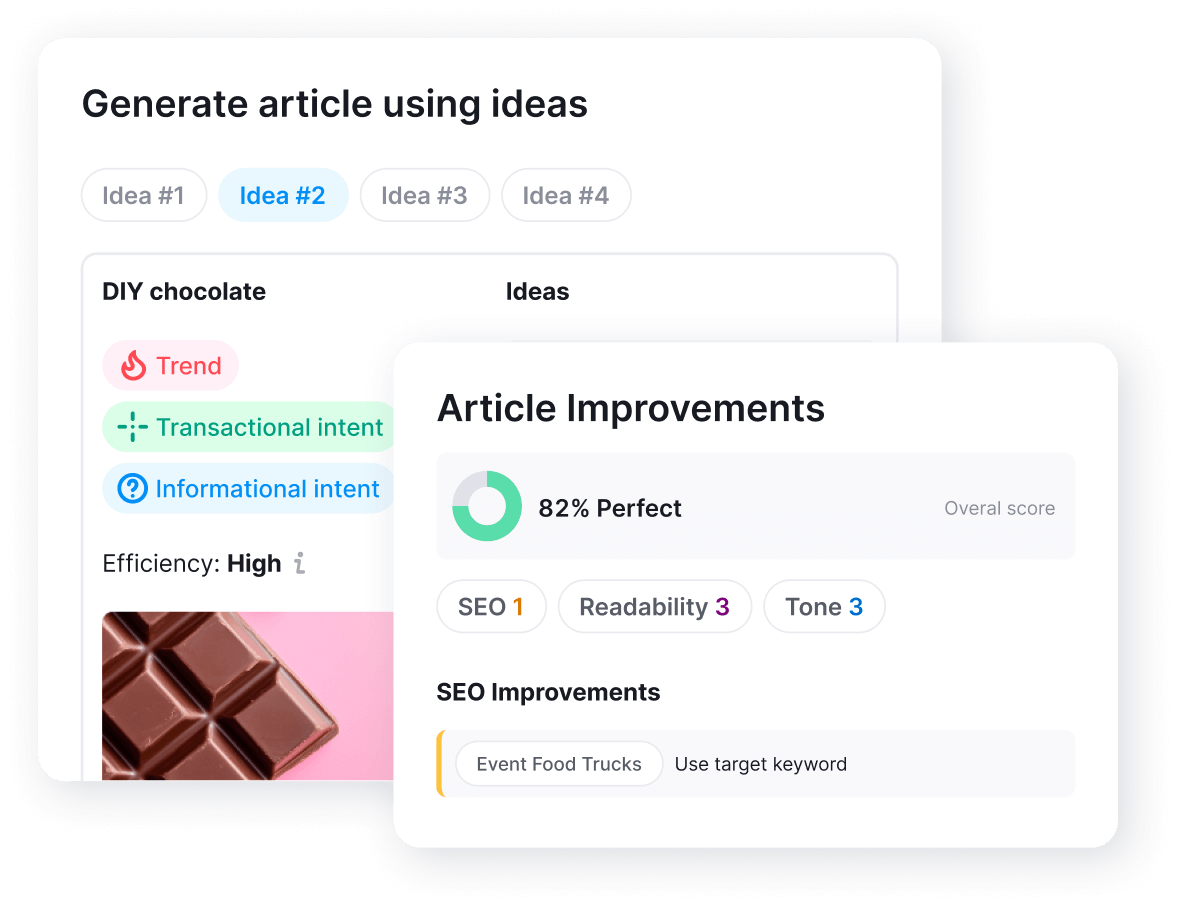
Content is the fuel for both SEO and AI discovery. This toolkit provides the data needed to create content that resonates with both human readers and search algorithms. It ensures your messaging is optimized for the way people search today, moving beyond simple keywords into "topic clusters" that demonstrate authority to both Google and AI bots.
The Semrush One Feature Set: Agility and Insight
When we look at the specific features of Semrush One, we see a platform optimized for the modern marketer who plays to win. It bridges the gap between traditional keyword metrics and the nuanced world of AI prompts.
Visibility Tracking: Side-by-Side Analysis. The standout feature here is the ability to track keyword rankings and AI mentions side-by-side. In the past, these were two different worlds. Now, you can demonstrate the impact of your SEO efforts on your AI visibility. If your brand is being cited in a ChatGPT answer, Semrush One helps you track that citation just like you would a #1 ranking on Google.
From a strategic standpoint, this matters because visibility is becoming zero-sum. If an AI Overview takes up 80% of the mobile screen, your #2 organic ranking is essentially invisible. You need to know if you are winning that AI slot. In a real-world workflow, this looks like a weekly report that shows: "We rank #3 for 'best CRM,' and we are the primary citation in the Google AI Overview for that same query."
Prompt Monitoring: Understanding Natural Language. Search is becoming more conversational. People aren't just typing "best running shoes"; they are asking LLMs, "What are the best running shoes for someone with high arches training for a marathon on a rainy trail?" Semrush One’s Prompt Monitoring helps you discover these complex topics and natural language queries that are driving demand.
By understanding the prompts your audience uses, you can create content that captures that intent before your competitors even realize the trend has shifted. This isn't just about keywords; it's about intent mapping.
Website Optimization: Step-by-Step Guidance. Technical health is the foundation of all visibility. Semrush One provides step-by-step guidance for fixing site issues. Whether it’s a crawlability error impacting Google or a structured data problem that prevents an AI bot from correctly interpreting your site’s information, the platform identifies the issue and gives you a clear path to resolution. It takes the "guesswork" out of technical SEO, making it accessible for practitioners who may not have a background in web development.
The Model Context Protocol (MCP): The End of the "Copy-Paste Tax." Semrush One users gain access to the Model Context Protocol (MCP). This is a highly technical and transformative feature that many overlook. It allows you to connect Semrush's massive dataset directly into your AI assistants (like ChatGPT or Claude).
In a real-world workflow, this looks like chatting with your data. Instead of exporting a 5,000-row spreadsheet, uploading it to ChatGPT, and asking for a summary, you simply ask your MCP-enabled AI: "Analyze my top 10 declining keywords from Semrush and suggest three content updates based on current competitor rankings." It eliminates the "copy-paste tax" and allows for real-time, agentic interaction with your most valuable data.
Semrush for Enterprise: Scaling the Untouchable Brand
While Semrush One is about agility, Semrush for Enterprise is about dominance at scale. This solution is engineered for organizations with 1,000+ employees, global footprints, and complex brand architectures. When you are managing dozens of websites across 142 geo-databases and forty different countries, "agility" isn't enough; you need governance.
The core theme of the Enterprise platform is to help leaders "Eclipse the Competition." It achieves this by unifying the marketing stack. In a large organization, the SEO team, the content team, and the development team often work in vacuums. Semrush for Enterprise acts as the connective tissue, providing a single source of truth that every stakeholder can rely on.
Modular Solutions for Custom Growth. The platform is built on Modular Solutions. An organization can choose to integrate SEO, AI Optimization (AIO), and Site Intelligence (SI) modules based on its specific needs. This modularity ensures that the platform grows with the brand, rather than becoming a bloated piece of legacy software. You pay for the scale you need, but you never outgrow the capability.
Governance: The Silent Engine of Scale. Governance is often the "boring" part of MarTech, but for an enterprise, it is the most critical. Semrush for Enterprise provides:
Role-Based Access Control (RBAC): Ensuring that a local marketing manager in Milan only sees the data relevant to their region, while the Global VP of Marketing has a bird's-eye view of all 200+ managed domains.
Multi-Workspace Controls: Managing visibility across multiple brands and sub-brands without the risk of data contamination or user conflict.
Unlimited Guest Users: Allowing stakeholders, executives, and external agency partners to view reports without incurring additional seat costs or security risks.
Strategist’s Perspective: At the enterprise level, your biggest competitor isn't just the other guy in the SERPs, it's internal friction. Governance isn't about restriction; it's about empowerment. When people have the right data for their specific role, they move faster.
The Enterprise Ecosystem: Advanced Modules and Data Intelligence
The Enterprise platform goes far beyond the standard SEO toolkit, offering deep-tier modules that provide a competitive advantage in the most crowded global markets.
Enterprise SEO: Performance and Forecasting. This module is built for organic growth at a massive scale. It moves beyond basic tracking to provide customizable reporting and search performance forecasting. It allows leadership teams to plan and defend their budgets with data-backed growth projections. You can finally answer the CFO's question: "If we invest $500k in content this year, what is the projected impact on our organic market share?"
Enterprise AI Optimization (AIO) and Query Fan-out Analysis. This is the industry's most advanced AI tracking solution. It features Query Fan-out Analysis, a sophisticated tool that reveals the secondary searches that AI models run behind the scenes to generate an answer.
From a strategic standpoint, this matters because LLMs often perform "hidden" searches to verify facts or find citations. If your brand isn't present in those "fan-out" queries, you lose the final citation in the user's ChatGPT response. By understanding this hidden search behavior, your team can target the specific data sources and niche sites that LLMs rely on for their "source of truth." Additionally, Persona-based Prompt Generation allows brands to identify and track the exact prompts different audience segments use, ensuring your AI strategy is as nuanced as your customer personas.
Site Intelligence (SI): Auditing Millions of Pages. Large enterprise sites are often behemoths with millions of pages, legacy subdomains, and complex JavaScript. The SI module can crawl these sites with ease, providing audits for accessibility, compliance, and QA. Crucially, it supports both traditional search engine bots and the new wave of AI bots.
In a real-world workflow, this looks like ensuring that your "robots.txt" and "Schema.org" markup are perfectly tuned so that when an AI bot crawls your site to learn about your new product line, it doesn't get stuck in a redirect loop or misinterpret your pricing data.
The Adobe Connection: Agentic Brand Visibility. In a groundbreaking move, Semrush has partnered to offer Adobe Brand Visibility. This connects Semrush’s AI search data with Adobe’s agentic execution.
From a strategic standpoint, this matters because it moves the needle from "insights" to "action." "Agentic execution" refers to AI agents that can actually perform SEO tasks, such as updating meta tags, optimizing content, or adjusting site architecture, autonomously based on the data Semrush provides. It is the ultimate bridge between "knowing" you have a visibility gap and "closing" it at scale.
Consumer Journey & Sentiment: The Human Element. The Enterprise ecosystem includes specialized data modules that provide a granular look at the human behind the search:
Datos: Provides global clickstream data. You can see how billions of people move, compare, and buy across the web. This allows you to identify "leaky buckets", where customers are dropping out of your competitor's funnel, and how you can capture them.
MFour: Real-time consumer surveys that trigger as people are "live and clicking." This allows you to understand the "why" behind the "what", the emotions and intentions of your audience that data points alone can't capture.
Insights24: A social listening powerhouse that monitors billions of online conversations across 20+ markets, allowing brands to shape the narrative in real-time as trends emerge on social platforms.
Direct Comparison: Scale, Limits, and Data Depth
To choose the right path, we have to look at the hard numbers. The difference in scale between the two platforms is significant and speaks to the different operational realities of their users.
Keyword Tracking: Tactical vs. Dominance. In Semrush One, you are looking at a daily limit of 500 to 5,000 keywords. This is perfect for a focused brand or a mid-sized site where you are tracking primary and secondary terms. However, Semrush for Enterprise shatters these limits, offering tracking for 25,000+ keywords daily.
From a strategic standpoint, this matters because at the enterprise level, you aren't just tracking "keywords"; you are tracking a "market." If you are a global retailer like Samsung or LG, you need to track thousands of products across dozens of regions and languages. You need the 25,000+ limit to see the full picture of your global footprint.
AI Prompt Tracking: Experimentation vs. Share of Voice. This is where the divergence becomes most apparent. Semrush One allows for tracking of 50 to 200 prompts daily, ample for a practitioner testing a new AIO strategy. Semrush for Enterprise scales this to 15,000 prompts.
In a real-world workflow, this looks like the difference between tracking "What is the best laptop?" (tactical) and tracking every conceivable variation of "Which laptop is best for [Persona] who needs [Feature] and lives in [Region]?" (dominance). To own the "Share of Voice" in AI search, you must monitor the long-tail prompts that define the consumer journey.
Crawl Capacity: Monthly Audits vs. Continuous Intelligence. Technical health audits in Semrush One are capped between 100,000 and 1 million pages per month. While significant, it doesn't meet the needs of a Fortune 500 company. The Enterprise platform offers the Platinum package, which supports crawls of 8 million pages or more. This allows for continuous monitoring of massive e-commerce environments where pages are added and removed daily.
Reporting: Manual Research vs. Executive Dashboards. Practitioners in Semrush One have access to 300 reports per day. While this is more than enough for manual research, Enterprise users require automated, real-time dashboards. Consequently, Semrush for Enterprise offers unlimited reporting. These reports are designed to be "executive-ready," connecting visibility metrics directly to ROI and revenue, allowing CMOs to present to the board with total confidence.
AI Visibility: The Industry-First Comparison
One of the most powerful features available to Semrush users is the AI vs. SEO Comparison. This is an industry-first tool that puts your Google organic performance side-by-side with your AI visibility.
The AI Visibility Index acts as your definitive benchmark. It isn't just about whether you are mentioned; it’s about how you rank against competitors within the AI's internal "ranking" system. This index allows you to see the tactics that are putting top brands at the top of AI answers.
While Semrush One covers the core LLMs (ChatGPT, Gemini, Perplexity), the Enterprise platform extends this coverage significantly. Enterprise users can track visibility across:
Claude: Known for its nuanced reasoning and growing use in professional environments.
Microsoft Copilot: The gateway to B2B search through the Microsoft 365 ecosystem.
Grok: Capturing real-time social sentiment and X (formerly Twitter) data.
DeepSeek: A rising force in the global AI landscape.
This broader coverage allows for a sophisticated Prompt Gap analysis. By identifying where your brand is missing from AI answers that your competitors are occupying, the Enterprise platform helps you create growth projections based on filling those gaps. It turns "AI strategy" from a buzzword into a mathematical path to market share.
Strategy and Support: From Self-Serve to Dedicated Consulting
The way you interact with Semrush also changes based on your plan. Semrush One is designed as a self-serve powerhouse. You sign up, you get a 7-day free trial, and you start working. The support model is standard, backed by a robust knowledge base and the Semrush Academy. It is built for the marketer who wants to move fast and figure things out on their own.
Semrush for Enterprise is a service-led experience. Because large organizations face complex stakeholder environments, Semrush provides Dedicated Onboarding Consultants and Quarterly Business Reviews (QBRs).
In a real-world workflow, this looks like having a Semrush strategist sit down with your team every three months to say: "Here is where you are losing ground to your competitors in AI visibility in the DACH region, and here is the modular adjustment we recommend for your Site Intelligence settings to fix it." The "Semrush Services" team acts as an extension of your own marketing department, helping you navigate the complexity of a multi-brand rollout.
The Decision Framework: Four Critical Questions
If you are still on the fence, I recommend evaluating your organization through these four "Company Archetypes" and the corresponding If/Then scenarios:
1. Team Size and Market Complexity
The Solo Growth Hacker (Semrush One): If you are a solo marketer or a small team (1-5 people) focused on one brand in a few markets, Semrush One is your best bet. Then you will benefit from the simplicity and the lower price point ($199–$549/month).
The Global Conglomerate (Enterprise): If you are managing visibility across multiple business units, regions, or a portfolio of brands, choose Enterprise. Then you need the 142 geo-databases and the ability to segment data by brand.
2. Governance and Access Requirements
The Agile Agency (Semrush One): If you have a few core users and don't mind shared access or simple user add-ons (45–100/user), Semrush One works.
The Distributed Enterprise (Enterprise): If you have 40+ users across different departments (SEO, Content, Dev, PR) who need specific permissions, you need the Enterprise governance controls to prevent data contamination and conflicting workflows.
3. Reporting and Stakeholder Management
The Practitioner (Semrush One): If your reporting is focused on tactical wins, rankings, technical health, and content gaps, for your own use, Semrush One is sufficient.
The CMO (Enterprise): If you are a VP or CMO who needs to present to the board and connect organic discovery directly to revenue, pipeline, and "Share of Voice," the Enterprise dashboards are non-negotiable.
4. Budget and Procurement Model
The Subscription Model (Semrush One): If you want transparent, monthly pricing, you can put it on a corporate card and start today, go with Semrush One.
The Custom Contract (Enterprise): If you require custom, annual contract-based pricing structured around your organization’s specific data volume and service requirements, the Enterprise custom quote is the only way to go.
Evidence of Success: Real-World Impacts
We don't just ask you to take our word for it; the data from our users tells the story of how these tools transform visibility.
Consider Picsart, a global creative platform. By using Semrush for Enterprise to automate their internal linking strategy across a complex site localized in 17 languages, they saw a staggering 124% growth in impressions and a 20% increase in clicks. Perhaps more importantly for a busy team, they saved 4 hours per week through automation, time that was reinvested into high-level creative strategy.
On the practitioner side, Coalition Technologies used Semrush's AI visibility tools to achieve a 429% boost in AI referral traffic. As their President, Jordan Brannon, noted, "The AI visibility score provided by Semrush is a piece of how we're reporting" on whether a brand is actually ranking inside an LLM.
With over 28 million marketers worldwide and 35% of the Fortune 500 trusting Semrush data, the platform is the foundation for the world's most visible brands.
Conclusion: Future-Proofing Your Search Strategy
The choice between Semrush One and Semrush for Enterprise isn't about which tool is "better", it's about which tool fits your current mission and your future ambition.
Semrush One is about simplicity and speed. It’s for the brand that needs to win today and wants the best SEO and AI toolset without the enterprise-grade complexity.
It’s for the agile team that wants to "move first" and capture the initial wave of AI search traffic before the heavy hitters even have their first meeting about it.
Semrush for Enterprise is about governance and scale. It’s for the brand that is already a leader and wants to stay that way by unifying its data, its teams, and its global strategy. It’s for the leader who knows that in the AI search era, the brand with the most accurate data, the best LLM coverage, and the most controlled narrative wins the long game.
Search has changed forever. The era of discovery is here. It’s time to choose the platform that will help you dominate it.
Ready to move first?
Frequently Asked Questions (FAQ)
What is the primary difference between Semrush One and Semrush for Enterprise? Semrush One is a self-serve platform built for small to mid-sized teams (practitioners) that combines SEO and AI visibility in one streamlined workflow. Semrush for Enterprise is a modular, custom-priced solution for large organizations that adds advanced governance, massive data scale (up to 25k+ keywords daily), and specialized modules like clickstream data (Datos) and social listening (Insights24).
How does the pricing structure differ?
Semrush One offers transparent, tiered pricing: Starter ($199/mo), Pro+ $299/mo), and Advanced ($549/mo). It is a self-serve model you can start immediately. Semrush for Enterprise uses a custom annual contract model based on your specific volume, user count, and required service levels (e.g., dedicated onboarding).
Can I track my brand’s visibility in ChatGPT and other AI models?
Yes. Both plans offer AI visibility tracking. However, Semrush One covers 5 major LLMs (including ChatGPT, Gemini, and Perplexity), while the Enterprise plan expands this to include Claude, Microsoft Copilot, Grok, and DeepSeek, providing a more comprehensive view of the AI landscape.
What is the "AI vs. SEO Comparison"?
This is an industry-first feature that allows you to view your traditional Google organic performance side-by-side with your visibility in AI search results. This is critical for identifying "Prompt Gaps", queries where you rank well in Google but are missing from AI citations, allowing you to adjust your content strategy accordingly.
How does Semrush for Enterprise handle site audits for very large websites?
The Enterprise platform includes the Site Intelligence (SI) module, which can crawl up to 8 million pages (and more with add-ons). It specifically audits for "AI readiness," ensuring your site is easily readable by both search engine bots and AI LLM crawlers.
Is it possible to upgrade from Semrush One to Enterprise?
Absolutely. Many organizations start with Semrush One to build their initial AI and SEO strategy and transition to the Enterprise platform as they expand into new markets, add more team members, or require the governance of multi-workspace controls.


Ako Reviews Blog is a platform dedicated to helping online businesses reach their full potential. It offers in-depth guides on product reviews, social media marketing, and comprehensive online business strategies. Whether you're an entrepreneur or a marketer, Ako Reviews Blog provides practical tips and expert insights to help you grow and succeed in the digital marketplace.
Stay informed with valuable tips delivered straight to your inbox.
Created with systeme.io 2026 | Home | Privacy Policy | Terms and Conditions | Disclaimer | Contact