
Step-by-Step Guide to Mastering Semrush for Digital Marketing
Step-by-Step Guide to Mastering Semrush for Digital Marketing
Introduction: Why Semrush is the "Growth Engine" for Modern Marketing
In the high-stakes world of digital marketing, Semrush has evolved into the definitive "Growth Engine" for professionals. Trusted by over 10 million marketers and 35% of the Fortune 500, it is no longer just an SEO tool; it is a comprehensive platform built to dominate both traditional search engines and the emerging landscape of Large Language Models (LLMs).
With the transition to Semrush One, the platform integrates its industry-leading SEO Toolkit with the AI Visibility Toolkit. This allows you to accelerate your strategy across Google while simultaneously optimizing for how your brand is perceived by AI platforms like ChatGPT, Gemini, and Google’s AI Mode.
By mastering this engine, you can:
Identify High-Value Keywords: Uncover the exact terms your audience uses and the profitable gaps your competitors have missed.
Track Rankings: Monitor your daily visibility across global, local, and AI search environments.
Fix Technical Issues: Resolve the "silent" errors that sabotage your site's performance.
Analyze Competitors: Benchmark against rivals to reverse-engineer their success.
Strategist Tip: ROI starts with efficiency. Focusing on "Easy" difficulty keywords (KD% < 50) is your fastest path to proving value to stakeholders and generating early revenue.
Phase 1: Setting Up Your Digital Command Center
Your journey begins by establishing a baseline. Simply enter your website name to launch your SEO Dashboard and a dedicated Semrush Folder. Think of the SEO Dashboard as your "Digital Command Center"—it provides a high-level snapshot of your site’s pulse.
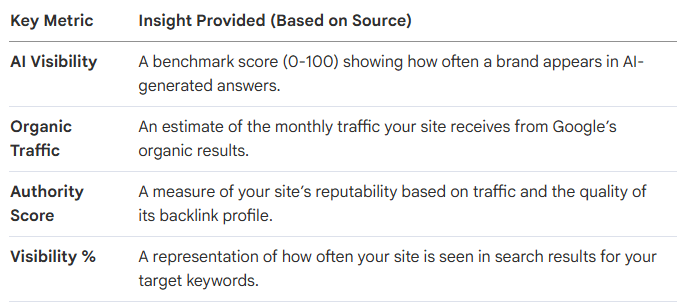
To maximize the dashboard’s utility, connect your Google Analytics and Google Search Console accounts. This enriches your Semrush data with actual user engagement metrics like sessions and engagement rates, providing a 360-degree view of your performance.
Phase 2: Mastering Keyword Research for Maximum Traffic
Keyword research is about more than volume; it’s about intent. Semrush uses the Keyword Overview for broad snapshots and the Keyword Magic Tool for surgical analysis. Understanding Search Intent is critical because LLMs use these intent signals to parse and cite your content in AI-generated answers.
Informational: The user seeks answers to questions (e.g., "how to brew espresso").
Navigational: The user wants a specific page (e.g., "Starbucks login").
Commercial: The user is researching products or brands (e.g., "best espresso machines").
Transactional: The user is ready to buy (e.g., "buy Breville Bambino Plus").
Strategic Use of the Keyword Magic Tool
Enter a "seed" keyword (e.g., "coffee").
Apply the Keyword Difficulty (KD%) filter to "Easy" (under 50%) to find low-hanging fruit.
Use the topical subgroups in the left-hand column to find niche opportunities.
The Strategy in Action: A coffee equipment site might discover the term "coffee vending machine." With a monthly volume of 5,400 and a KD% of only 23%, this is a high-value opportunity that is significantly easier to rank for than broader terms.
Phase 3: Competitive Intelligence and Market Positioning
The Domain Overview tool allows you to benchmark your performance against rivals. For a modern edge, pay close attention to the new AI metrics: Mentions (how many times the brand appears in AI responses) and Cited Pages (the number of pages from the domain used as a source by LLMs).
For broader market analysis, use the Growth Quadrant in Market Explorer:
Niche Players: Smaller or newer sites with lower growth.
Game Changers: Emerging companies with rapid growth. Strategist Tip: If you find yourself here, focus on aggressive backlink acquisition to break into the Leader quadrant.
Established Players: Companies with large, stable audiences.
Leaders: Dominant sites with massive audiences and high growth.
Gap Analysis: Use the Keyword Gap and Backlink Gap tools to find exactly where you are being outperformed. For example, comparing wholelattelove.com (109.7K visits) against coffeegeek.com (297.9K visits) reveals a 188.2K visit gap. By targeting the specific keywords where your competitor ranks and you don't, you can systematically capture that potential traffic.
Phase 4: Technical Health and Site Auditing
Technical health is the foundation upon which all content ROI is built. Even the best content cannot rank if your site is structurally broken.
The Site Audit tool scans for issues like:
Broken internal links (e.g., 404 errors).
Slow-loading pages that frustrate users.
Duplicate content that confuses search engines.
After the scan, you will receive a Site Health score. Prioritize your to-do list by focusing on Errors (the most critical) before moving to Warnings and Notices.
Free accounts: Limited to 100 pages per month.
Pro trials: allow up to 100,000 pages per month.
Phase 5: Tracking Rankings in the AI Era
Position Tracking provides the daily visibility updates needed to steer your strategy.
In the "Semrush One" era, visibility tracking now includes:
AI Visibility Toolkit: Track how often your brand is mentioned and identify visibility gaps across platforms such as ChatGPT, Gemini, and Google AI Mode.
Prompt Research Report: Use this to discover the specific questions and topics your audience is asking AI platforms, allowing you to create content that AI is more likely to cite.
Phase 6: On-Page Optimization for Immediate Wins
The On Page SEO Tool provides a prioritized list of improvements. Strategist Tip: Don't try to fix everything at once. Start with the "Top Pages" report within the tool to optimize the pages already driving the most value.
The tool provides recommendations in five categories:
Strategy: Title and meta description improvements.
Content: Semantic keyword usage, word count, and readability.
User Experience: Mobile-friendliness and page speed.
Technical: HTTPS and Schema markup.
Backlinks: Targeted link-building opportunities.
Example: Adding a target keyword to an H1 heading or increasing content length to match top-ranking rivals can lead to immediate ranking boosts.
Phase 7: Leveraging Multi-Channel Marketing Toolkits
Local Toolkit
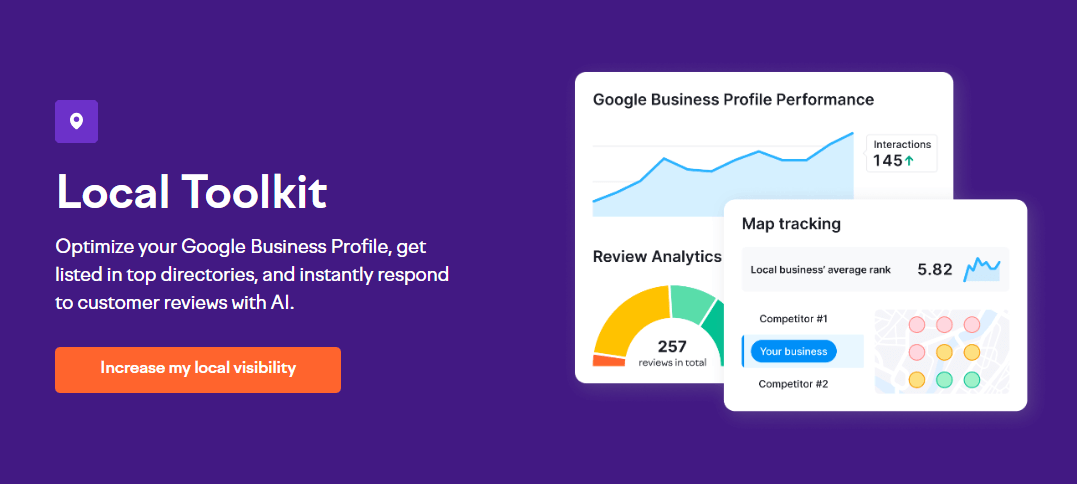
Manage Google Business Profiles and local directory listings. Use AI to respond to customer reviews and dominate local map rankings.
Content Toolkit
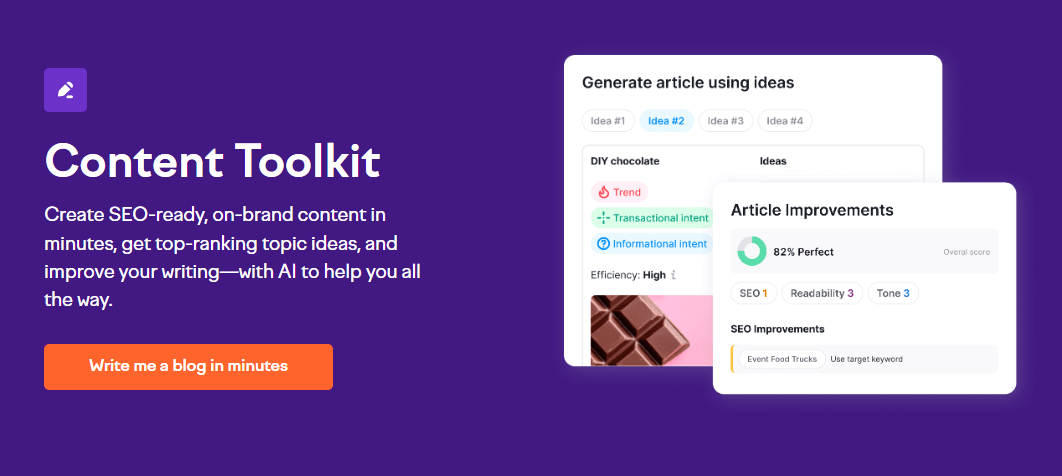
Generate high-ranking ideas with Topic Research and use the SEO Writing Assistant to score content in real-time for readability, originality, and SEO-readiness.
Social Toolkit
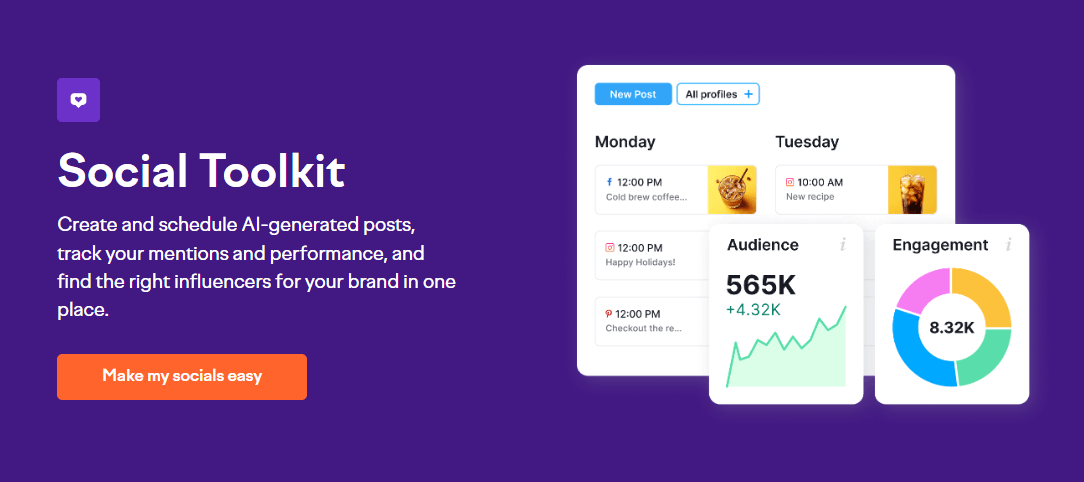
Schedule posts across Facebook, Instagram, and LinkedIn. Monitor brand mentions and engagement to build community.
Advertising Toolkit
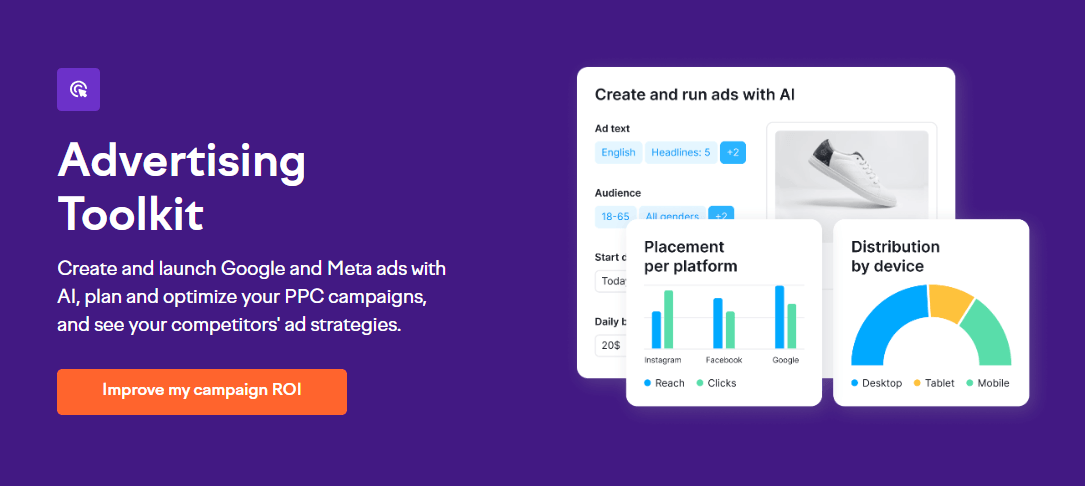
Uncover competitors' PPC strategies and ad copy. Plan AI-powered Google and Meta ad campaigns that maximize your budget.
PR Toolkit
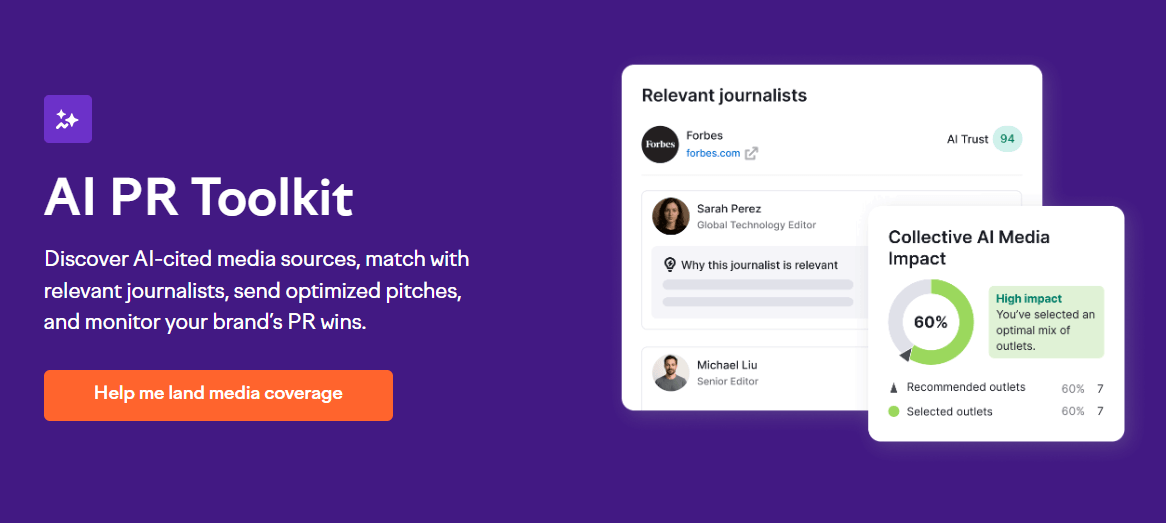
Find media outlets trusted by LLMs. Launch outreach campaigns in minutes to earn the citations that build brand authority.
Phase 8: Building a Data-Driven Strategy with SMART Goals
Every successful campaign begins with a strategic foundation. Before executing, use the Buyer Persona tool to map out your audience’s pain points and buying influences. Messaging that solves a specific challenge is the key to converting leads into customers.
With your persona established, set SMART goals (Specific, Measurable, Actionable, Relevant, Time-bound).
Strategic SMART Goal Example:
Goal: Increase organic traffic by 15% within the next three months.
Actionable Steps: Optimize on-page SEO for the top 10 revenue-generating pages and publish four new SEO-optimized blog posts per month.
Phase 9: Automated Reporting and Stakeholder Management
Use the My Reports tool to translate technical data into business impact. Stakeholders care about growth, not just "errors fixed." Create a PDF report and drag-and-drop widgets for these essential KPIs:
Keyword ranking improvements.
Backlink profile growth.
Total traffic increases.
AI Visibility gains.
Schedule these for automated weekly or monthly delivery to keep your team and clients aligned.
Frequently Asked Questions
1. What Is Semrush and How Can It Benefit Your Business?
Semrush is a comprehensive digital marketing platform designed to improve website visibility and help businesses attract more customers by diagnosing and fixing online performance issues. It functions as a "command center" for your search strategy, offering specialized toolkits for SEO, AI Visibility, Social Media, Advertising, Content Marketing, and Market Research.
Your business can benefit from Semrush by:
Improving Search Rankings: Identifying and fixing technical issues that sabotage your visibility, such as slow-loading pages or broken links.
Driving High-Quality Traffic: Finding high-value keywords your competitors might be missing and optimizing on-page content for "quick wins".
Monitoring Competitors: Analyzing competitor strategies to uncover growth opportunities and benchmarking your brand's authority against theirs.
Winning in AI Search: Tracking how your brand is mentioned in AI-generated answers on platforms like ChatGPT and Google AI Mode.
2. Why Should You Use Semrush for Keyword Research?
Semrush provides access to one of the world’s largest AI-driven marketing databases, containing billions of keywords. It is essential for keyword research because:
In-Depth Metrics: The Keyword Overview tool provides critical data, including monthly search volume, keyword difficulty (KD%), search intent (the "why" behind a search), and average cost-per-click (CPC).
Keyword Magic Tool: This allows you to generate a massive list of related keywords from a single "seed" term, which you can then filter for "Easy" difficulty (KD% under 50) to find low-competition targets.
Identifying Intent: It helps you distinguish between informational, navigational, commercial, and transactional keywords, ensuring your content matches what the user is actually looking for.
Gap Analysis: The Keyword Gap tool identifies specific terms that your competitors are ranking for, but you are not, revealing immediate traffic potential.
3. When to Use Semrush for Your SEO Campaigns?
You should utilize Semrush throughout the entire lifecycle of an SEO campaign:
Initial Setup & Monitoring: At the start of a campaign, create an SEO Dashboard and begin tracking daily ranking changes through the Position Tracking tool.
Technical Auditing: Periodically (recommended monthly) to run a Site Audit, which scans for hundreds of technical errors like duplicate content or site health issues.
Competitive Benchmarking: Whenever you need to assess your market share or understand why a competitor is gaining more organic traffic than you.
On-Page Optimization: When you want to improve existing pages, the On-Page SEO Tool provides actionable advice on word count, readability, and backlink opportunities.
Reporting Results: When you need to communicate progress to stakeholders using automated, professional PDF reports.
4. Where to Find Semrush Tutorials and Resources?
Semrush offers several educational platforms to help users master their tools:
Semrush Academy: Features free online classes led by top marketing professionals, allowing you to earn official certificates of proficiency.
Knowledge Base & Help Center: Provides detailed user manuals, "how-to" guides, and videos for every feature on the platform.
Semrush Blog: Offers the latest industry thoughts on SEO, content strategy, and social media.
Webinars: Live educational sessions where experts share advanced marketing strategies.
SEO Onboarding Checklist: A specific resource designed to guide new users through their first steps on the platform.
5. How Does Semrush Compare to Other SEO Tools?
According to industry experts and users, Semrush stands out for several reasons:
Accuracy and Intuition: Users have noted that its keyword tracking is more accurate and its interface is more intuitive than other tools they have used.
All-in-One Value: It is considered a high-value option because it combines a fully-featured SEO suite with Google Ads (PPC) software and social media tools for the same price.
360-Degree View: Unlike tools that may focus only on one niche, Semrush covers all areas of search, allowing marketers to have a comprehensive view of their projects.
Competitive Intelligence: It is frequently cited as a leader in competitive research, specifically for its ability to analyze keyword and backlink gaps that other tools might miss.
Conclusion: Your Semrush Success Checklist
Take these steps immediately to launch your growth engine:
Create your SEO dashboard to establish your monitoring foundation.
Identify 5-10 high-value keywords using the Keyword Magic Tool (KD% < 50).
Set up Position Tracking for your target keywords and AI prompts.
Run a Site Audit and resolve all "Critical Errors" first.
Analyze the 3 top competitors using the Keyword Gap tool to find traffic opportunities.
Optimize your top 5 pages using the On-Page SEO Tool.
Schedule an automated report to track your KPIs weekly.
Visit Semrush Academy for free professional certification courses.
Start your 7-day free trial to unlock the full power of Semrush One.


Ako Reviews Blog is a platform dedicated to helping online businesses reach their full potential. It offers in-depth guides on product reviews, social media marketing, and comprehensive online business strategies. Whether you're an entrepreneur or a marketer, Ako Reviews Blog provides practical tips and expert insights to help you grow and succeed in the digital marketplace.
Stay informed with valuable tips delivered straight to your inbox.
Created with systeme.io 2026 | Home | Privacy Policy | Terms and Conditions | Disclaimer | Contact