
How to Optimize Your ClickFunnels Pages with Semrush: 2026 Guide
Introduction: The Power of Search-Optimized Funnels
In the high-stakes arena of digital entrepreneurship, most marketers are trapped on a treadmill they can’t afford to stop. This treadmill is fueled by paid advertising, Facebook ads, Google PPC, and sponsored social posts. The moment you stop pouring money into the machine, your traffic, leads, and sales evaporate instantly. As a Senior SEO Strategist, I’m here to tell you there is a better way to build a sustainable empire. The secret lies in the synergy between ClickFunnels SEO and the analytical powerhouse of Semrush.
When we talk about search engine optimization, we aren’t just talking about ranking for a few obscure words. We are talking about building a compounding, free traffic source that works for you twenty-four hours a day, seven days a week, 365 days a year. While you are sleeping, while you are on vacation, and while you are working on your next big product launch, an optimized funnel continues to attract, educate, and convert your ideal customers. This is the ultimate "Visibility Engine."
However, visibility is only half the battle. You can have all the traffic in the world, but if your landing pages don't know how to close the deal, you’re just a popular person with an empty wallet. This is where ClickFunnels comes in, it is the world’s most powerful "Conversion Engine." It is designed with sales psychology at its core, moving people through the Hook, Story, Offer framework until they become loyal customers.
Our goal today is to bridge the gap between these two worlds. We are not interested in "traffic for traffic’s sake." We want high-quality, high-intent traffic that results in a healthier bottom line. By utilizing the Semrush One suite, we can identify exactly what your customers are searching for and then use ClickFunnels to deliver the perfect solution. This guide will provide the technical workflows and strategic insights you need to dominate the search landscape in 2026 and beyond.
The Fundamental Pre-Check: Conversion Before Traffic
Before we even touch a keyword tool, we must establish a foundational rule of digital marketing: driving traffic to a funnel that doesn't convert is the fastest way to go broke. SEO is like high-octane racing fuel, but your funnel is the vehicle. If the engine is seized and the tires are flat, the fuel doesn't matter. You will just be wasting energy.
The core of every successful ClickFunnels page is the Hook, Story, Offer format.
The Hook: You have about three seconds to stop someone from scrolling or hitting the "back" button. Your headline and visual elements must grab them by the throat.
The Story: Once you have their attention, you must build an emotional connection. You share the struggle, the epiphany, and the transformation that your product provides.
The Offer: Finally, you present the irresistible solution. This isn't just a product; it’s a package of value that makes the price seem insignificant.
Once this psychological framework is solid, you need to ensure your technical conversion elements are firing on all cylinders. Here are the 10 essential conversion elements you must implement before focusing on ClickFunnels SEO:
Add a Sales Funnel: Move beyond the "dead" static website. A website is a brochure where people get lost; a funnel is a guided journey with a single, clear goal.
Make it Load Faster: Speed is your first impression. If a page takes longer than a few seconds to load, the user will bounce before they ever see your "Hook." Use the Semrush Site Audit tool to identify speed bottlenecks early.
Use Scarcity and Urgency: Human beings are hardwired to procrastinate. Countdown timers and "limited stock" notices create a psychological nudge that tells the user, "If I don't act now, I lose."
Leverage Social Proof: People look to others to determine correct behavior. Testimonials, customer logos, and real-time purchase notifications build the "know, like, and trust" factor essential for sales.
Simplify Your Forms: Every form field you add reduces your conversion rate. If you only need an email, don't ask for a phone number, home address, or mother’s maiden name. Keep it lean.
Use Exit-Intent Pop-Ups: This is your "Hail Mary" play. When a user moves their mouse toward the "X" on their browser, trigger a pop-up with a lead magnet or a special discount to save the lead.
Use Heatmaps and Clickmaps: You need to see where users are actually clicking. If they are clicking on a non-clickable image instead of your CTA button, you have a design flaw that is costing you money.
Build Follow-Up Funnels: Most sales don't happen on the first visit. You need an automated email or SMS sequence that continues the "Story" and reminds the prospect of the "Offer."
Use Contrasting Colors for CTAs: Your "Buy Now" button should not blend into the background. Use a color that pops. If your site is blue, make the button orange or yellow. It should be the most obvious thing on the page.
Provide a Clear Value Proposition: Within the first five seconds, a visitor should know exactly what problem you solve. If they have to hunt for the benefit, they’ve already left.
Keyword Research: Finding Your "Keyword Unicorns" with Semrush
In my years of consulting, I’ve found that the biggest mistake entrepreneurs make is "guessing" what their customers search for. They create content based on what sounds good to them, rather than what the data supports. To win at ClickFunnels SEO, you need to find Keyword Unicorns, phrases that have a healthy search volume but low competition, allowing you to rank quickly and stay there.
The Keyword Magic Tool Workflow
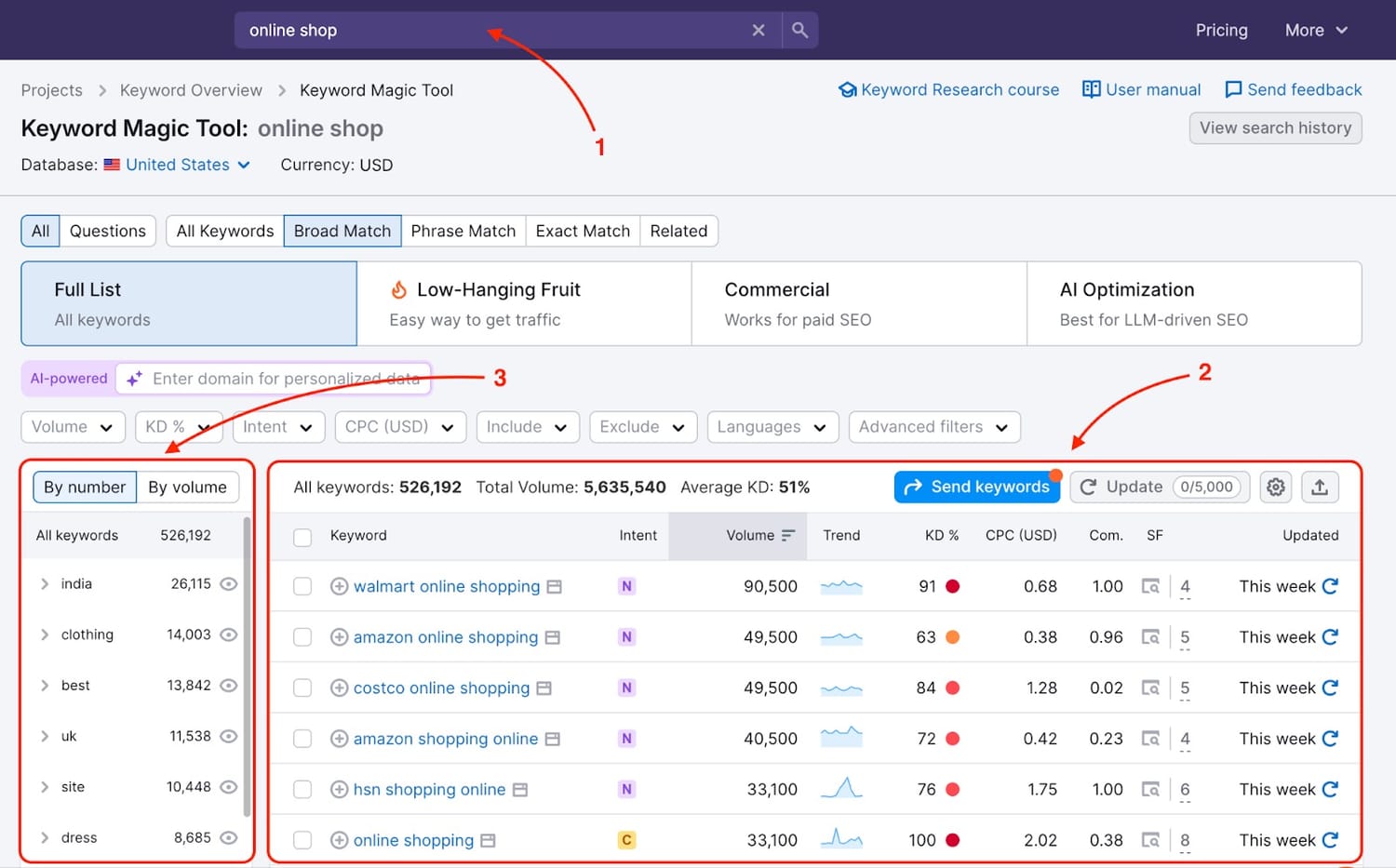
The Keyword Magic Tool within Semrush is the gold standard for this research. Here is how you use it like a pro:
First, enter a broad "seed" keyword related to your niche. If you sell high-end coffee equipment, enter "coffee machines." The tool will generate thousands of variations. Now, we apply our "Unicorn Filters." I want you to set the Keyword Difficulty (KD%) to a maximum of 30. This filters out the highly competitive terms dominated by massive retailers. Next, set your volume filter to a minimum of 100 searches per month.
You are looking for the "sweet spot." For example, while "best coffee maker" might be impossible to rank for, you might find "best portable espresso maker for camping" has 400 searches a month and a KD of 22. That is a unicorn. It’s specific, it shows high commercial intent, and you can realistically own the first page of Google for it.
Identifying Search Intent
Data is meaningless without context. Semrush categorizes keywords by intent, and you must match your funnel page to that intent:
Informational Intent: The user wants to learn (e.g., "how to clean a moka pot"). These keywords are perfect for blog posts that lead into a lead magnet.
Commercial Intent: The user is researching (e.g., "AeroPress vs French Press"). Use these for comparison pages in your funnel.
Transactional Intent: The user is ready to buy (e.g., "buy stainless steel coffee dripper"). These keywords must point directly to your sales page or order form.
Navigational Intent: The user is looking for a specific brand.
Competitive Intelligence with Keyword Gap
Don't reinvent the wheel. Use the Keyword Gap tool to enter your URL and the URLs of your top three competitors. This tool will show you exactly which keywords they are ranking for that you aren't. If all three of your competitors are ranking for "organic coffee beans subscription," and you aren't even targeting it, you’ve just found a massive opportunity.
The 2026 Landscape: AI Overviews (SGE)
As we look toward 2026, the game is shifting. Semrush One now includes tools to track your visibility in AI Overviews (formerly SGE). Our research shows that over 80% of AI-generated search summaries are triggered by niche, informational queries with fewer than 1,000 monthly searches. This is a massive shift. By targeting long-tail, specific questions, you aren't just ranking in the blue links; you are becoming the cited source for AI models like ChatGPT and Bing Copilot.
Technical Optimization Inside the ClickFunnels Workspace
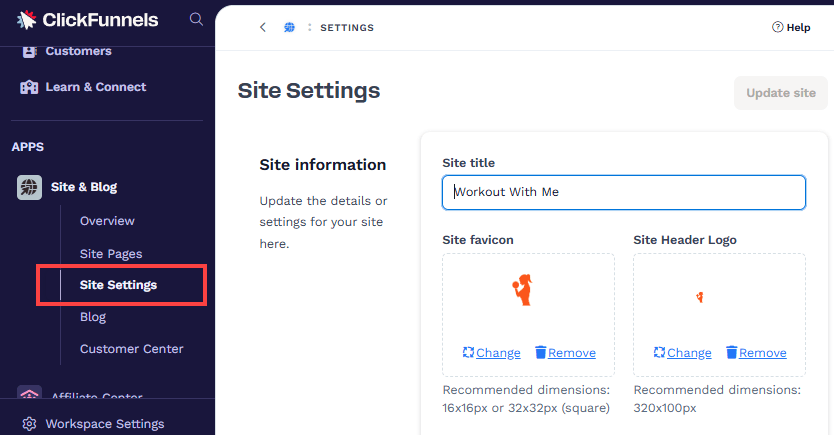
Now that we have our unicorn keywords, we need to implement them. ClickFunnels 2.0 has made this incredibly intuitive, but you have to know where the levers are. Technical optimization in ClickFunnels happens at three levels: the Product, the Page, and the Funnel settings.
Product SEO: Naming for Success
Navigate to the "Products" section in your workspace. Select a product, such as the "FitLife Performance Hoodie" mentioned in our training sessions. Scroll down to the "SEO and Sharing" section.
The biggest mistake I see is people leaving the product name as something generic like "Product 1" or "Hoodie Blue." Google has no idea what that is. You need to use a natural keyword in the Title and ensure the "Current Path" (the URL) matches. Instead of fitlife.com/product-1, it should be fitlife.com/performance-hoodie-athletic-fit. This tells the search engine exactly what is on the page.
The Omni AI Advantage
If you’re feeling stuck, ClickFunnels 2.0 features the Omni AI assistant. Click the small "i" icon next to the SEO settings, and Omni will pop up. This AI can analyze your product details and suggest optimized titles and descriptions that follow current best practices. It’s like having a junior SEO strategist built right into your dashboard.
Funnel Page SEO: The "Three Little Dots"
Every page in your funnel, from the opt-in to the thank-you page, has its own SEO settings. Click the "three little dots" on the page thumbnail to open the settings.
SEO Title and Description: This is what appears on the Google search results page. Make it compelling. Don't just list the product; give them a reason to click.
Index in Search Engine Toggle: This is a critical strategic lever. You want your "Squeeze Page" (opt-in) and "Sales Page" to be indexed (Toggle ON) so people can find them. However, you should toggle this OFF for your "Thank You" pages and "Order Confirmation" pages. You don't want people finding the "download" page through a Google search without paying for the offer first.
Sharing Image: Always upload a lifestyle image here. When your funnel link is shared on Facebook or X, this image is what stops the scroll. A picture of someone actually using your product is 10x more effective than a static product shot.
Advanced Head Code and Google Search Console
For the final piece of the technical puzzle, go to the overarching Funnel Settings. Here you will find the "Head Code" area. This is where you paste your Google Search Console (GSC) verification tag.
Think of GSC as your direct line of communication with Google. It tells Google your funnel exists and provides you with a "Health Report." It will show you exactly which keywords are driving clicks, which pages have indexing errors, and how often Google's bots are visiting your site. Pairing GSC data with Semrush competitive intelligence is the "pro move" for 2026.
Building Content with the Semrush "Content Toolkit"
In the world of ClickFunnels SEO, content is the bridge that carries a stranger from a search query to your sales page. The Semrush Content Toolkit is designed to make this bridge as strong as possible.
Topic Research and Topic Efficiency
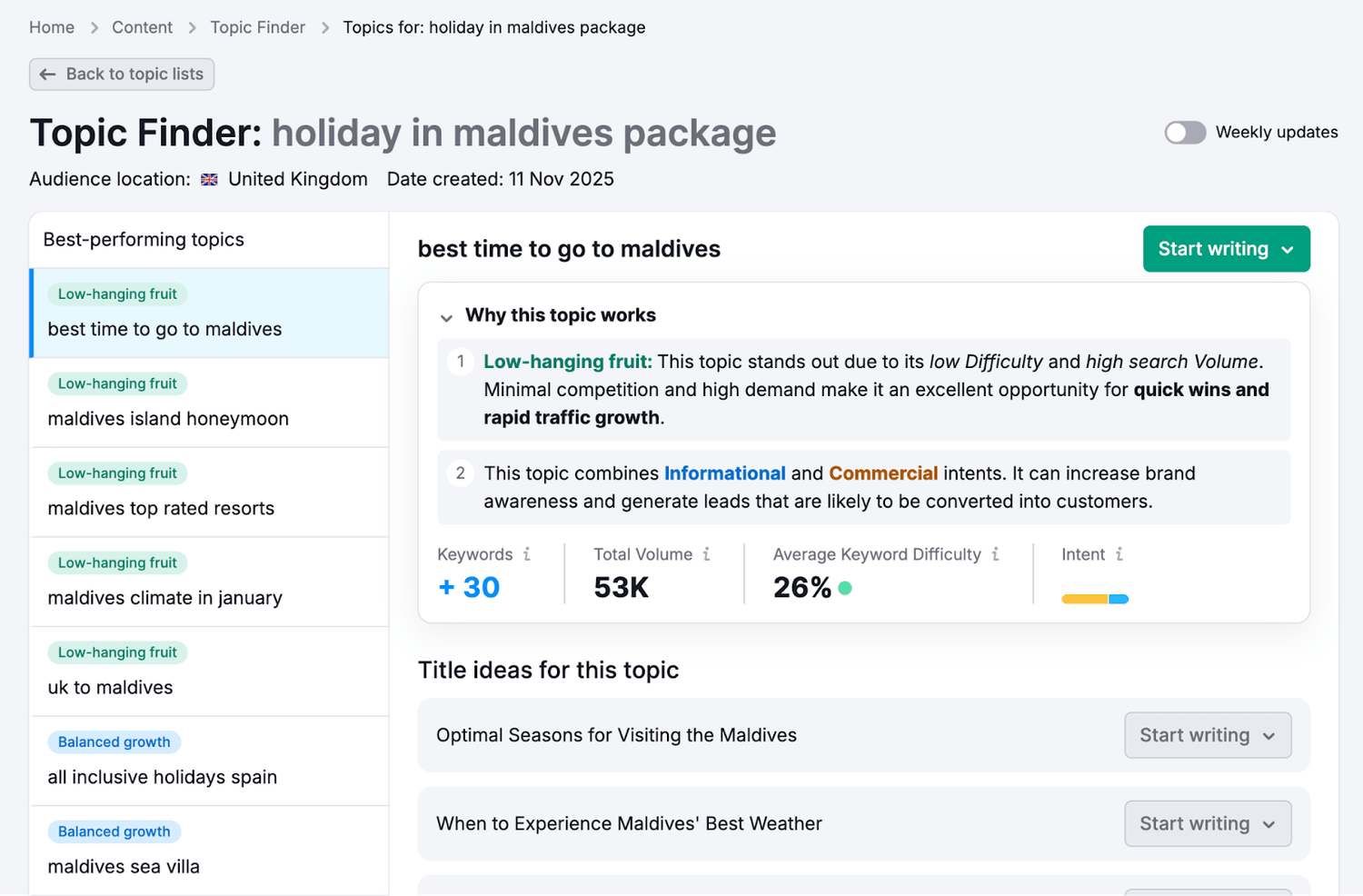
Start with the Topic Research tool. When you enter a topic like "weight loss for busy professionals," select the "Mind Map" view. This gives you a visual web of everything people are asking about that topic.
Pay close attention to "Topic Efficiency." This metric identifies subtopics that have a high search volume but are relatively easy to rank for. If "15-minute meal prep for executives" is a high-efficiency topic, that should be your next blog post or lead magnet. By answering the specific questions your audience is asking, you build immediate authority.
The SEO Content Template
Once you have your topic, the SEO Content Template does the heavy lifting. It analyzes the top 10 results currently ranking on page one of Google for your keyword. It then gives you a "recipe" for success:
Semantically Related Keywords: It will suggest words like "nutrition," "high-protein," and "time-management" to include, so Google understands the context of your article.
Readability: It will tell you if the current winners are written at a 6th-grade level or a college level. Match that tone to compete.
Text Length: If the top 10 articles average 2,500 words, you aren't going to rank with a 500-word blurb.
The SEO Writing Assistant (The Four Pillars)
The SEO Writing Assistant is a real-time tool you can use in Google Docs, WordPress, or directly in Semrush. It evaluates your content based on four pillars:
Readability: Does the text flow? Are the paragraphs too long?
SEO: Have you included your target keywords and optimized your image alt attributes?
Tone of Voice: Is your writing too formal for a casual audience? The tool ensures you stay consistent.
Originality: It runs a plagiarism check to ensure your content is unique, which is vital for maintaining trust with search engines.
On-Page SEO Mastery: Structure and Metadata
Mastering on-page SEO is about making your content "consumable" for search crawlers. If a bot can't understand your page, a human will never see it.
Metadata and the "First 100" Rule
Your Title Tag should be under 60 characters and your Meta Description should be around 105 characters. Both must contain an exact match of your target keyword. But here is the "secret" of senior strategists: that same keyword must appear in the first 100 words of your page content. This immediate reinforcement tells Google, "Yes, this page is exactly what the user is looking for."
The HTML Heading Hierarchy
Think of your page like a book.
H1: The Title of the book (Only one per page).
H2: The Chapters.
H3: The Sub-sections. Never jump from an H1 to an H3. This breaks the logical flow for search engine crawlers and can actually hurt your rankings. Use your H2s to include variations of your target keyword to broaden your reach.
Snagging Position 0: The Dictionary Definition Tactic
The most coveted spot in 2026 is the Featured Snippet, or "Position 0." This is the box that appears above the first organic result. To snag this, use the "Dictionary Definition" tactic.
For example, if you are writing about real estate, have a section with the heading "What is Wholetailing?" (an H2). Immediately below that, provide a 1-2 sentence, concise, jargon-free definition: "Wholetailing is a real estate strategy where an investor purchases a property, performs minimal repairs, and lists it on the MLS to sell to a retail buyer."
By providing this "instant answer," you make it incredibly easy for Google to pull your text into the snippet. Once you have the snippet, you become the primary authority for that search query.
Technical Performance: Speed and Mobile-First Optimization
Google has one primary goal: to keep users happy. If Google sends a user to a ClickFunnels page that takes forever to load or looks broken on a phone, the user gets frustrated. If the user is frustrated, Google looks bad. Consequently, Google will stop ranking your page.
The 5-Second Speed Benchmark
Statistics prove that if your site loads in 5 seconds or less, you are already in the top 15% of all websites globally. However, for high-conversion funnels, we aim for 3 seconds or less. Use PageSpeed Insights to audit your funnel.
The #1 culprit for slow funnels is unoptimized images. Before you upload a photo to ClickFunnels, run it through a compressor and convert it to a modern format like WebP or AVIF. These formats maintain high quality while significantly reducing the file size.
Mobile-First Indexing and Thumb-Friendliness
Google now uses the mobile version of your site for indexing and ranking. This is non-negotiable. When designing in ClickFunnels, always use the "Mobile View" editor to ensure your layout holds up.
A key technical requirement is "thumb-friendliness." Ensure all buttons, links, and form fields are at least 44 pixels tall and wide. If a user has to "pinch and zoom" to click your "Buy Now" button, your conversion rate and your SEO rankings will plummet.
Advanced Authority Building: Backlinks and AI Visibility
In the SEO world, backlinks are "votes of confidence." When a high-authority site links to your ClickFunnels page, they are telling Google, "We trust this person." This trust is the fuel that moves you from page 10 to page 1.
Three Organic Link-Building Strategies
Curated Data and Statistics: Writers are always looking for data to back up their claims. If you create a page titled "25 Surprising Coffee Industry Statistics for 2026" and curate data from various sources, other bloggers will link to you as their reference.
Original Research and Case Studies: Conduct a test. Share a detailed teardown of how you grew your business. Use the EmailMastery model, deeply detailed, "original" feeling content that provides value that doesn't exist anywhere else.
Visual Assets: Create an infographic or a calculator (e.g., a "ROI Calculator for Funnel Marketing"). People love to embed these on their own sites, and when they do, they are obligated to link back to you as the source.
The "Carlos" Outreach Method
Link building is a human game. Once you have a piece of "Link-Worthy" content, reach out to site owners with a personalized email. Avoid the generic "Please link to me" spam. Use this structure:
"Hi [Name], I’m [Your Name]. I just read your guide on [Topic] and loved your point about [Specific Detail]. I actually just published a piece of original research on [Related Topic] that provides some fresh data on [Specific Point]. I thought it might add some great value to your readers as a reference. Keep up the great work on the podcast!"
This "Value-First" approach is how you build an elite backlink profile.
AI Visibility and Semrush One
In 2026, authority isn't just about Google; it's about being the source of truth for Large Language Models (LLMs). Within Semrush One, you can now use the AI Visibility Toolkit to see how ChatGPT and other AI platforms "talk" about your brand. By using structured data, bulleted "Key Takeaways," and authoritative language, you ensure that when someone asks an AI, "Who is the best provider of [Your Product]?", your name is the one it provides.
Improving "Time-on-Page" and User Engagement
Time-on-page is a "hidden" ranking signal that carries massive weight. If a user clicks your link and stays for five minutes, Google knows your content is excellent. If they leave in five seconds, Google knows you failed them.
To keep people glued to your ClickFunnels pages, you must optimize for "scannability." Most people don't read every word; they scan for the answer.
Use Bold Sub-headlines: Your H2s and H3s should tell the whole story on their own.
Multimedia Integration: A 2-minute video can keep a user on a page significantly longer than a block of text.
Key Takeaways Summary: Place a bulleted list of "Key Takeaways" at the very top of your article. This satisfies the "skimmers" and, more importantly, gives AI models a concise summary to crawl and cite.
Whitespace: Don't crowd your text. Use short paragraphs of 3-4 sentences maximum. Plenty of white space makes the reading experience feel easy and non-intimidating.
Conclusion: Taking Action with Semrush One
We have covered the entire spectrum of ClickFunnels SEO, from the psychological foundation of the "Hook, Story, Offer" to the high-level technical nuances of AI visibility in 2026. The journey from being invisible to being the dominant authority in your niche is not a sprint; it is a strategic build.
By combining the world-class conversion architecture of ClickFunnels with the unparalleled data of Semrush, you are creating a digital asset that will pay dividends for years. Semrush One is your command center for this mission. It allows you to track your traditional rankings and your AI visibility in one unified platform, ensuring you never miss a shift in the digital landscape.
The competitive advantage in 2026 goes to the entrepreneurs who act now. Don't wait for your competitors to find their "Keyword Unicorns." Dive into the Keyword Magic Tool today, audit your funnel speed, and start crafting the "Dictionary Definitions" that will land you at Position 0. The search engines are waiting to send you traffic; it’s time to give them a reason to do it. Optimize your funnels, dominate your niche, and let’s grow your business.


Ako Reviews Blog is a platform dedicated to helping online businesses reach their full potential. It offers in-depth guides on product reviews, social media marketing, and comprehensive online business strategies. Whether you're an entrepreneur or a marketer, Ako Reviews Blog provides practical tips and expert insights to help you grow and succeed in the digital marketplace.
Stay informed with valuable tips delivered straight to your inbox.
Created with systeme.io 2026 | Home | Privacy Policy | Terms and Conditions | Disclaimer | Contact